
Carbon Accounting Software: Complete Guide for Businesses (2026)
Learn how carbon accounting software works, essential features, GHG Protocol requirements, costs, and how to choose the right platform in 2026.
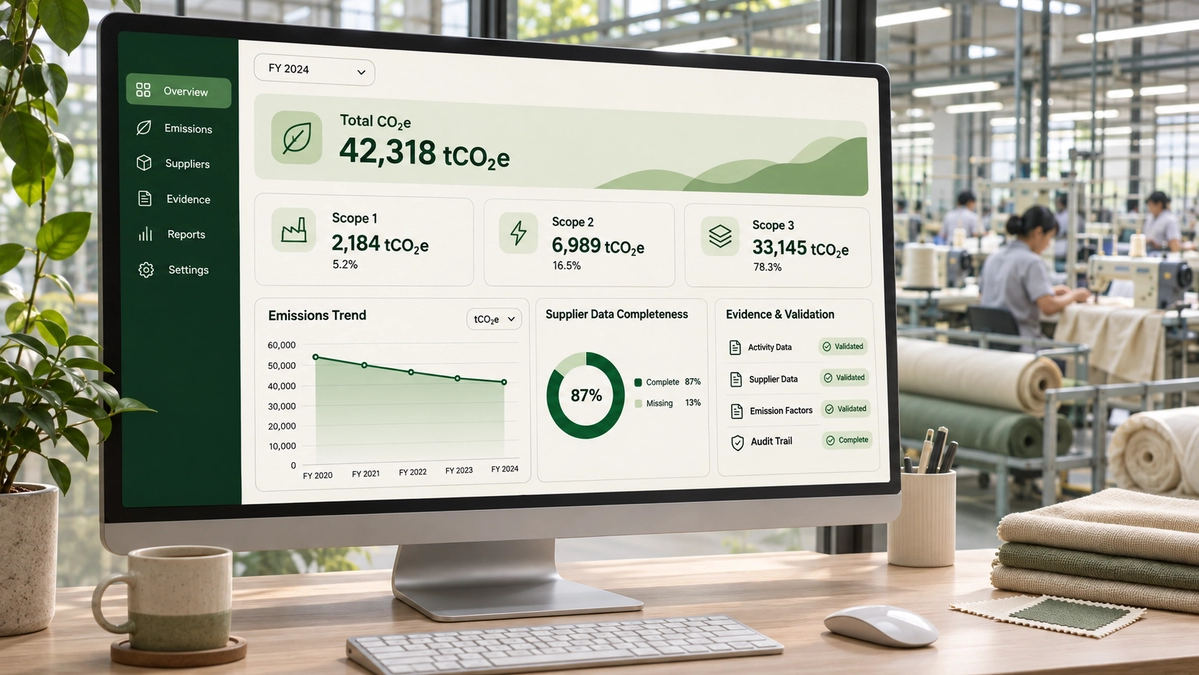
Carbon accounting software turns operational and supply-chain data into greenhouse gas (GHG) emissions results expressed as carbon dioxide equivalent (CO₂e). For businesses managing multiple facilities, suppliers or products, it can replace fragmented spreadsheets with documented calculations, evidence, review workflows and reporting.
The right platform should help you answer five questions: Where did the data come from? Which method and emission factor were used? How reliable is the result? Who reviewed it? What decision can reduce emissions?
What is carbon accounting software?
Carbon accounting software is a digital system for quantifying, organizing, analyzing and reporting emissions associated with business activities. It converts information such as electricity use, fuel purchases, material quantities, transportation and supplier operations into CO₂e.
Unlike financial accounting, carbon accounting combines physical activity data, emission factors and defined organizational or product boundaries. A useful platform connects four functions: data collection, emissions calculation, evidence and quality checks, and improvement planning.
Why businesses use it
Companies use carbon accounting for procurement decisions, climate disclosures, operational efficiency and investment planning. Spreadsheets can work for an initial inventory, but become difficult to control across multiple sites, reporting periods, suppliers and products.
- Consistency: apply documented methods across facilities and reporting years.
- Efficiency: reduce repeated entry and manual calculations.
- Traceability: connect reported totals to activity records and evidence.
- Supplier visibility: identify upstream emissions and data gaps.
- Decision support: compare energy, material and procurement opportunities.
Software alone does not make results accurate. Boundaries, activity data, emission factors and technical review still determine reliability.
How carbon accounting software calculates emissions
A common activity-based calculation is:
GHG emissions = Activity data × Emission factor
Activity data describes how much of an activity occurred, such as kilowatt-hours consumed or litres of diesel burned. An emission factor expresses emissions per unit of that activity.
Worked example: electricity in a textile mill
For an illustrative facility using 2,000,000 kWh and a hypothetical factor of 0.45 kg CO₂e per kWh:
2,000,000 kWh × 0.45 kg CO₂e/kWh = 900,000 kg CO₂e
This factor is illustrative, not a verified grid factor. A real inventory should use a factor appropriate to geography, reporting year, units, accounting method and system boundary. The software should retain the source data, factor source and version, assumptions, evidence, reviewer and any corrections.
Scope 1, Scope 2 and Scope 3
The GHG Protocol separates emissions into three scopes. Scope 1 covers direct emissions from sources an organization owns or controls. Scope 2 covers indirect emissions from purchased or acquired electricity, steam, heat and cooling. Scope 3 covers other indirect emissions across the value chain.
For a vertically integrated textile manufacturer, the system must distinguish its own operations from external suppliers. For a fashion brand that outsources production, purchased goods and services may represent a substantial part of Scope 3.
Location-based and market-based Scope 2
The location-based method reflects average grid emissions where electricity is consumed. The market-based method reflects qualifying contractual instruments where applicable. In markets with contractual choice, the GHG Protocol Scope 2 Guidance generally calls for both results subject to its conditions. A platform should keep them distinct and should not assume every renewable-energy purchase makes electricity zero-emission.
Features to evaluate
Assess whether a platform preserves underlying data and calculation logic, rather than only displaying final totals. Look for:
- Documented boundaries, scopes, methodologies and calculation versions.
- Emission factors with source, geography, reporting period, units and version.
- Evidence retention, data-quality checks, approvals and correction history.
- Supplier workflows that distinguish primary data from estimates.
- Integration, exports and APIs, plus data portability if you change vendors.
- Product-level capabilities if product carbon footprints are in scope.
Corporate accounting and product carbon footprints
Corporate carbon accounting measures emissions associated with an organization over a reporting period. Product carbon footprinting (PCF) quantifies GHG emissions for a defined product system and life-cycle boundary, usually per functional or declared unit.
A spinning mill could report its annual Scope 1, 2 and 3 inventory and separately calculate the cradle-to-gate footprint of 1 kg of cotton yarn. Product footprints require choices about allocation, materials, process yields and boundaries. ISO 14067:2018 and the GHG Protocol Product Standard are recognized frameworks. A product carbon footprint covers climate change; a broader life-cycle assessment can assess other environmental impacts too.
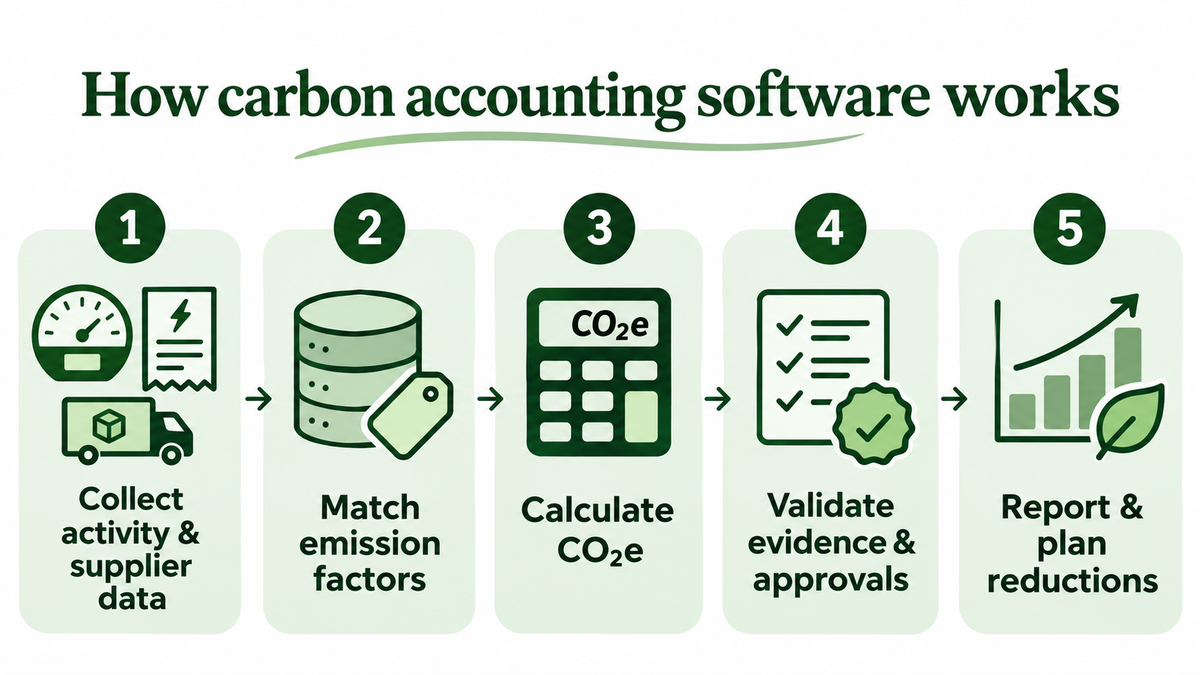
Carbon accounting workflow: collect activity and supplier data, match emission factors, calculate CO₂e, validate evidence and approvals, then report and plan reductions.
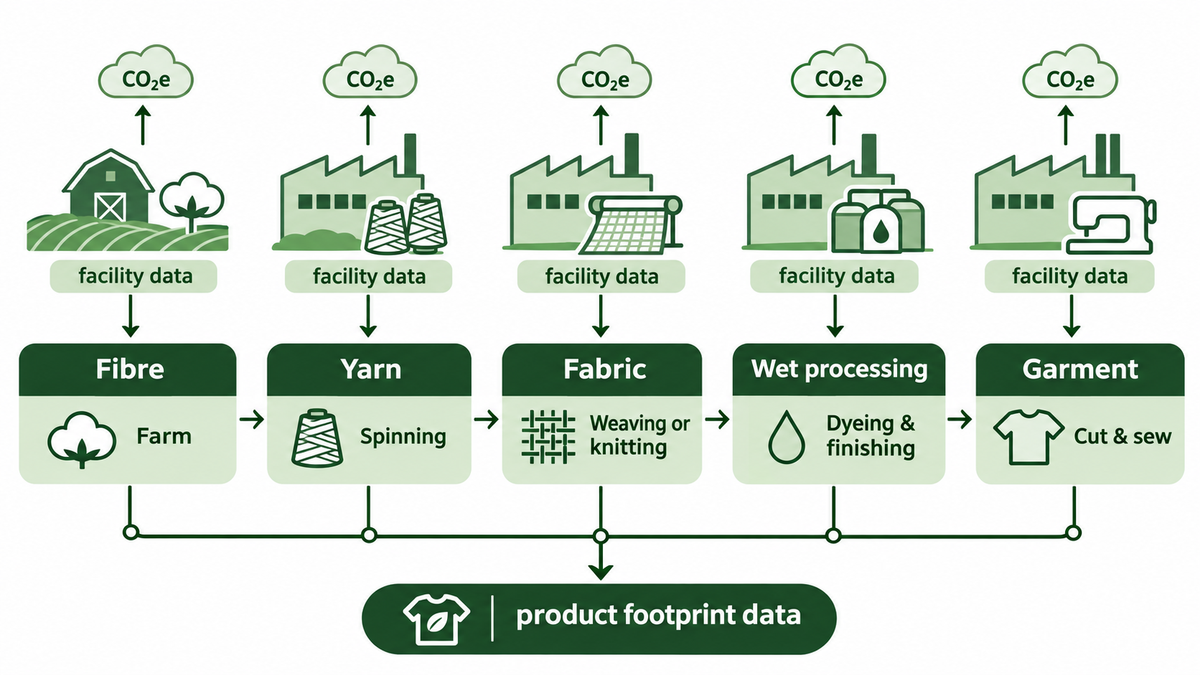
Textile product footprint supply chain from fibre and yarn through fabric, wet processing, and garment production, with facility data feeding product footprint data.
Why textile and fashion companies need specialized capabilities
A textile product can pass through fibre production, spinning, knitting or weaving, wet processing, garment manufacturing, distribution, use and end of life. Each stage may involve different suppliers, processes, energy sources, losses and data limitations.
A textile-focused system should support process-specific energy and production data, material composition, waste and yield calculations, and defensible allocation between products. Reusable supplier facility records can reduce repeated questionnaires while respecting permissions. Primary supplier data can reveal differences between facilities, while secondary factors remain useful for screening and documented gaps. The goal is to improve data quality progressively, not wait for perfect data before beginning.
Standards and disclosure requirements
No single framework covers every corporate, product and disclosure need. The GHG Protocol Corporate Standard supports organizational inventories; its Scope 2 Guidance addresses purchased energy; ISO 14067 and the GHG Protocol Product Standard address product footprints. PACT adds methodological and technical specifications for product carbon data exchange; its V3 methodology was released on 30 April 2025, subject to its transition provisions.
Carbon accounting software itself is generally not prescribed by law. Applicable measurement and reporting requirements depend on jurisdiction, entity size, reporting status and local adoption of disclosure frameworks. The EU CSRD scope was substantially narrowed by the 2026 Omnibus simplification package; the revised principal threshold is more than 1,000 employees and more than €450 million in net annual turnover, with other provisions and transition arrangements. Supplier requests do not automatically make a non-EU supplier directly subject to CSRD.
The EU Ecodesign for Sustainable Products Regulation establishes a framework for product-specific ecodesign requirements and Digital Product Passports. It does not mean every textile product already has a mandatory passport or carbon-footprint disclosure; product obligations depend on relevant delegated acts. In the UK, US and other markets, assess applicable rules separately and check their current implementation. Choose software against actual obligations and customer needs.
How to choose a platform
- Define the objective. Decide whether you need a corporate inventory, supplier data, a product footprint, disclosure or a reduction programme.
- Test calculation transparency. Trace a result from source activity data through factor, unit conversion, method, evidence and assumptions.
- Evaluate supplier workflows. Check if suppliers can submit approved information once and reuse it across customers with appropriate permissions.
- Check product capabilities. Verify process inventories, material composition, functional units, allocation and applicable product rules. A corporate Scope 3 module is not necessarily a full LCA engine.
- Test audit readiness and interoperability. Review evidence, versioning, approvals, exports, APIs and data portability.
Platforms on the market
The market includes enterprise sustainability platforms, dedicated GHG accounting systems and product-footprint solutions. Examples include Watershed, Persefoni, Fairly Green, Normative, Sweep, Greenly, Plan A and IBM Envizi. Capabilities differ across integrations, Scope 3, reporting, reduction planning, industry focus and implementation. Compare vendors through controlled demonstrations. For textile businesses, ask each to calculate both an annual facility inventory and a cradle-to-gate yarn or fabric footprint using the same source data.
Implementing carbon accounting software
- Establish boundaries, facilities, reporting year, scopes and accountable teams.
- Map electricity, fuel, purchasing, production, logistics and supplier data.
- Configure factors, units, methods and standards.
- Pilot one facility or product family and reconcile calculations independently.
- Validate missing data, anomalies, duplicates, boundaries and assumptions; then approve.
- Scale to more facilities, suppliers, products and reduction initiatives.
A spinning or dyeing facility can be a practical textile pilot because energy use and output connect to measurable processes.
Mistakes to avoid
- Using a generic factor without checking its activity, geography, period and boundary.
- Presenting spend-based Scope 3 estimates as measured supplier performance.
- Confusing organizational inventories with product footprints or adding them indiscriminately.
- Ignoring defensible allocation of shared energy and process emissions.
- Assuming software guarantees compliance or independent assurance.
- Measuring without using results to improve energy, materials, procurement and investment.
Implementation checklist
- Define reporting entities, facilities and organizational boundaries.
- Identify applicable standards and disclosure requirements.
- Assign data owners across sustainability, finance, operations and procurement.
- Collect electricity, fuel, refrigerant, production and purchasing data.
- Select and document emission factors and methods.
- Identify material Scope 3 categories and supplier-data gaps.
- Configure evidence retention, validation and approvals.
- Pilot and independently reconcile representative calculations.
- Review product footprint needs where relevant.
- Approve baseline results and establish reduction monitoring.
Must do: Follow requirements that apply to your organization and any standard under which you claim conformity.
Should do: maintain consistent methods, data sources, responsibilities and quality controls.
Good practice: build reusable supplier records, automate recurring collection and connect results to operational improvements.
Frequently asked questions
What is the difference between carbon accounting and carbon management software?
Carbon accounting focuses on measuring and reporting emissions. Carbon management often adds target setting, reduction scenarios and initiative tracking. Many platforms combine both, so evaluate actual capabilities.
Can Excel be used for carbon accounting?
Yes. Controlled spreadsheets can support inventories when boundaries, factors, calculations and evidence are documented. Dedicated software becomes more valuable as data, supplier participation and audit complexity grow.
Does carbon accounting software calculate Scope 3 emissions?
Many platforms use spend-based, activity-based, supplier-specific or hybrid methods. Results depend on input quality. Check category coverage, calculation transparency and distinction between estimates and primary information.
Is carbon accounting software the same as LCA software?
No. Corporate accounting measures organizational emissions; life-cycle assessment evaluates impacts associated with a product system and can cover impacts beyond climate change. Some platforms combine these capabilities.
How much does carbon accounting software cost?
Pricing depends on organizational complexity, users, facilities, integrations, suppliers, reporting and advisory services. Compare implementation and recurring costs, including onboarding, factor access, assurance support and exports.
Can software make a footprint audit-ready?
It can support evidence retention, traceability, approvals and reproducible calculations. Audit readiness is not independent assurance and does not guarantee conformity with a standard.
Key takeaways
- Carbon accounting software transforms activity and supply-chain data into structured GHG inventories.
- Reliable results depend on boundaries, suitable factors, primary data and quality controls.
- Scope 1, 2 and 3 accounting and product footprints are distinct but complementary.
- Textile businesses benefit from connecting facility energy, production processes, materials and suppliers.
- Choose transparent calculations and evidence over dashboards alone; evaluate fit through demonstrated workflows and data portability.
How FairlyGreen fits
For fashion brands and textile manufacturers, the challenge is connecting organizational GHG accounting, product footprints, supplier traceability and sustainability information. FairlyGreen is designed around these interconnected needs, including GHG accounting aligned with the GHG Protocol and product environmental footprint capabilities informed by life-cycle methodologies.
Explore FairlyGreen to see how structured sustainability data can support reporting and decision-making. Book a demo with FairlyGreen.
References
- GHG Protocol Corporate Accounting and Reporting Standard
- GHG Protocol Scope 2 Guidance
- GHG Protocol standards and guidance
- ISO 14067:2018
- GHG Protocol Product Standard
- PACT methodology and resources
- IFRS S2 climate-related disclosures
- Council of the EU: sustainability reporting changes
- EU Regulation 2024/1781 (ESPR)
Share this article
Help others discover this content
Similar Articles
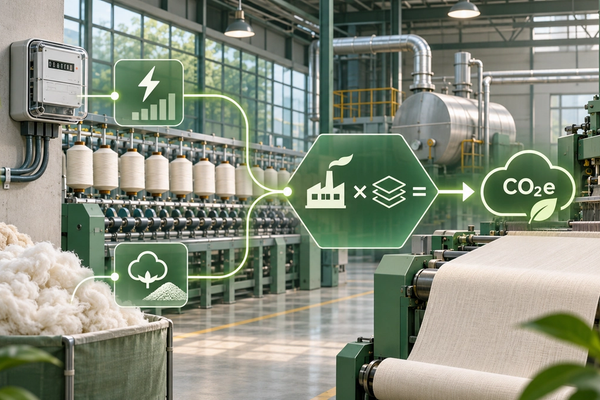
Emission Factors Explained: How to Choose, Calculate and Use Them in Carbon Accounting
Learn what emission factors are, how to calculate GHG emissions, where to find reliable 2026 data, and how to avoid costly carbon accounting errors.

How to Calculate a Product Carbon Footprint: A Step-by-Step Guide for Textile Manufacturers and Fashion Brands
Learn how to calculate a product carbon footprint (PCF) using ISO 14067, formulas, textile examples, emission factors, and supplier data.

EU Textile Sustainability Regulations 2026: The Practical Guide for Fashion, Apparel and Footwear
A practical 2026 guide to EU textile sustainability regulations covering ESPR, DPP, EPR, PPWR, green claims, CSRD, CSDDD, forced labour and EUDR.