
Why GRI 303: Water and Effluents Matters - And How FairlyGreen Helps You Take Action
Water isn’t just a resource. It’s a lifeline. And in industries like textiles, apparel, and footwear, it’s also one of the most used - and often wasted - resources. From textile dyeing to washing garments, water flows through every part of the production process. But with global water scarcity rising, the fashion industry is under pressure to clean up its act. That’s where GRI 303: Water and Effluents comes in.

Water isn’t just a resource. It’s a lifeline.
And in industries like textiles, apparel, and footwear, it’s also one of the most used - and often wasted - resources.
From textile dyeing to washing garments, water flows through every part of the production process. But with global water scarcity rising, the fashion industry is under pressure to clean up its act. That’s where GRI 303: Water and Effluents comes in.
Let’s break it down.
What Is GRI 303: Water and Effluents?
GRI 303 is part of the Global Reporting Initiative’s sustainability reporting standards. It focuses on how companies use, consume, and discharge water across their operations and supply chains.
In simpler terms:
It’s a global rulebook that helps businesses understand and report their water impact clearly and consistently.
This matters because access to clean water is a human right - and our planet is running short on it.
Why Water Reporting Is Critical in Fashion & Apparel
Water isn’t just used to grow cotton. It’s used to:
- Wash raw fibers
- Dye fabrics
- Rinse chemicals
- Steam and finish garments
- Clean machinery
In fact, the fashion industry uses around 79 billion cubic meters of water per year - enough to fill 32 million Olympic-sized swimming pools.
Yet most of this water ends up polluted and wasted.
Factories often discharge untreated or poorly treated effluents - dirty water full of dyes, microplastics, and chemicals - into rivers and water bodies. The result? Harm to aquatic life, damage to ecosystems, and toxic water for communities nearby.
GRI 303 helps organisations:
- Track where and how they use water
- Understand local water stress risks
- Improve how they discharge water (effluents)
- Set meaningful goals to reduce impact
What Does GRI 303 Require?
Here’s what companies need to report under GRI 303:
1. Water Withdrawal
How much water is taken from sources like rivers, wells, or supplied by a third party.
2. Water Consumption
How much water is used in a way that can’t be returned - like evaporation, crop irrigation, or product integration.
3. Water Discharge
How much and where the used water goes after use - surface water, groundwater, or public sewage systems.
4. Water Quality Standards
Whether your wastewater meets discharge rules - especially in countries with poor regulation.
5. Interaction With Water as a Shared Resource
How your company respects local needs, collaborates with communities, and manages water in stressed regions.
The Problem: Reporting Is Hard. Data Is Siloed. Impacts Are Invisible.
Most sustainability teams struggle to:
❌ Track water use across departments
❌ Monitor which suppliers are wasting or polluting water
❌ Visualize who’s using the most water - and why
❌ Stay compliant with GRI standards in real time
The Solution: How FairlyGreen Makes GRI 303 Easy
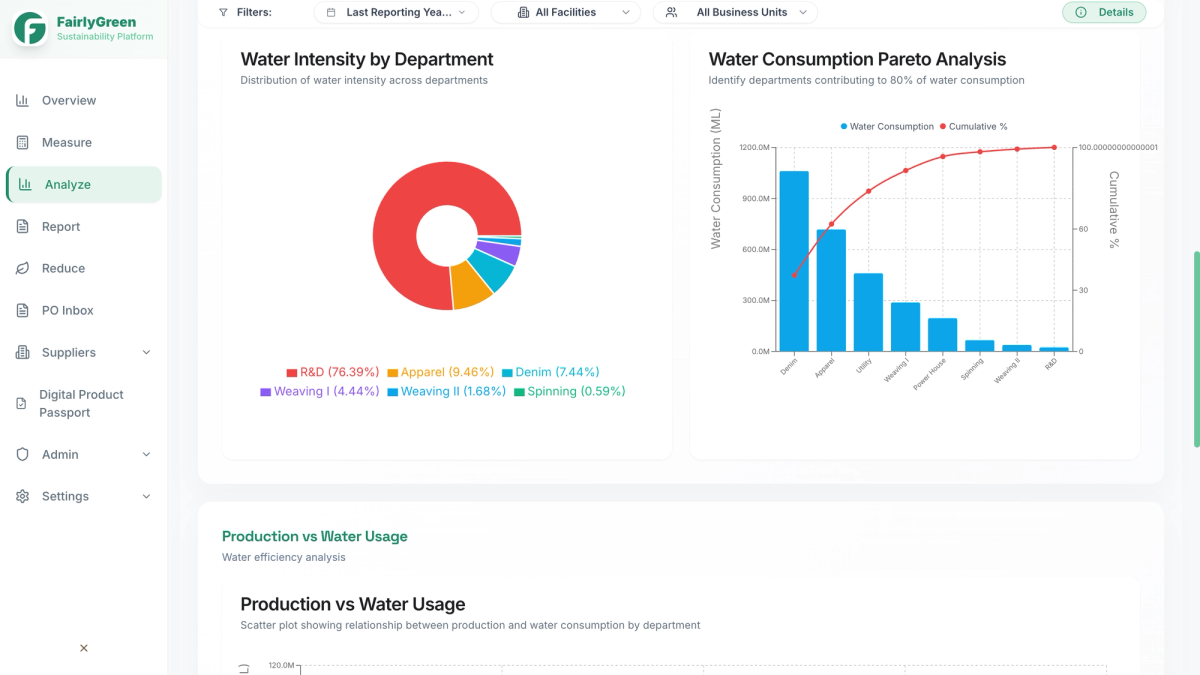
At FairlyGreen, we simplify GRI 303 reporting with real-time, visual, and actionable dashboards.
Take a look at what you can track instantly on our platform:
🌊 Water Intensity by Department
Visually identify departments consuming the most water - like R&D, Denim, or Apparel.
📊 Pareto Analysis of Water Consumption
Pinpoint which 20% of departments contribute to 80% of water use.
🌀 Production vs Water Usage
See how production levels compare to water consumption- spot inefficiencies fast.
🔬 Supplier Water Impact
Trace water withdrawals and discharges across your supply chain - even from third-party sources.
❗ Catchment-Level Risk
Identify facilities in water-stressed areas, and prioritize improvements where they matter most.
📈 Auto-Ready Reports
Export GRI-compliant disclosures for 303-1 to 303-5 in a few clicks - no spreadsheets, no chaos.
water-dashboard
Why This Matters Now
Starting January 2021, GRI 303 reporting is mandatory for companies who declare water and effluents as a material topic.
If you’re in textiles, apparel, or footwear, that’s almost guaranteed.
The pressure is rising - from investors, regulators, and consumers. But with the right tools, transparency doesn’t have to be hard.
Final Thoughts: Water Is Shared. So Is the Responsibility.
Water isn’t just about operations. It’s about people.
It’s about the communities where your clothes are made.
It’s about the ecosystems affected by your supply chain.
GRI 303 gives you the framework.
FairlyGreen gives you the power to act on it.
💧 Ready to simplify your water reporting?
📞 Book a demo with FairlyGreen today and get ahead of water risks, compliance, and sustainability goals.
Share this article
Help others discover this content
Similar Articles

Why Measuring Emissions at Every Stage of Manufacturing Matters More Than Ever
As the EU tightens sustainability regulations across the fashion industry, the bar for environmental transparency is rising fast. The Product Environmental Footprint Category Rules (PEFCR v3.1) and the upcoming Ecodesign for Sustainable Products Regulation (ESPR) demand more than general claims—they require measurable, stage-specific carbon data.

EU Digital Product Passport for Textiles: What Brands Must Prepare for Now
The EU Digital Product Passport for textiles is not just a QR code. Learn what is decided, what remains proposed, and how to prepare now.

How Fashion Brands Can Lead on Sustainability with the New PEFCR Guidelines?
Sustainability isn’t just a trend - it’s becoming law. The EU’s latest Product Environmental Footprint Category Rules (PEFCR) for apparel and footwear, published in April 2025, set a new standard for carbon accounting across the fashion industry. If your brand isn’t prepared to align with these rules, you risk falling behind.