
Digital Product Passports: A Practical Buyer’s Guide for Fashion and Textile Teams
Digital Product Passports are becoming a practical compliance and product-data challenge for fashion and textile teams. Here’s what buyers should understand before selecting a DPP solution.
Digital Product Passports: What Fashion Buyers Should Know Before Choosing a Solution
Digital Product Passports are quickly becoming one of the most important shifts in how fashion and textile products are documented, verified, and shared.
For many brands, the first thought is simple: create a QR code, link it to a product page, and show the customer key sustainability information.
But in practice, a Digital Product Passport is much more than a QR code.
It is a structured product record that may need to connect product identifiers, material composition, supplier data, certifications, environmental information, claims evidence, and long-term version history.
For buyers, sourcing teams, sustainability leads, and compliance teams, this means DPP readiness is not just a marketing or design task. It is a data and supplier-readiness challenge.
Why buyers need to pay attention
Buyers and sourcing teams are often closest to the information that DPPs depend on.
They know which suppliers are involved, where product data usually sits, which certificates are available, and where gaps appear during production or documentation.
That makes them central to DPP preparation.
A brand may be able to publish a good-looking digital product page quickly, but if the underlying data is scattered across spreadsheets, supplier PDFs, audit folders, and emails, the passport becomes difficult to trust, maintain, and scale.
The real question is not only:
Can we publish a DPP?
It is:
Can we support that DPP with reliable product, supplier, and evidence data over time?
What the guide covers
The guide is designed for apparel, footwear, and textile teams that are starting to evaluate DPP solutions or prepare their internal data foundations.
Inside, it walks through the practical areas teams should consider before choosing a platform, including readiness, vendor evaluation, implementation planning, supplier workflows, claims evidence, and pilot preparation.
The goal is to help teams avoid treating DPP as a one-off QR code project and instead approach it as a scalable product transparency workflow.
A practical starting point
Digital Product Passports will require more than a last-minute publishing exercise.
Teams that begin preparing early can identify data gaps, improve supplier collaboration, organize evidence, and create a stronger foundation for compliance, sustainability reporting, and customer trust.
For fashion and textile businesses, the smartest first step is not to wait for every final detail to become clear.
It is to understand what kind of product data foundation will be needed — and how to choose a solution that can grow with your requirements.
FairlyGreen helps fashion and textile teams build the product data, supplier workflows, and Digital Product Passport infrastructure needed to move from pilot to scale.
Share this article
Help others discover this content
Similar Articles
EU Textile Sustainability Regulations 2026: The Practical Guide for Fashion, Apparel and Footwear
A practical 2026 guide to EU textile sustainability regulations covering ESPR, DPP, EPR, PPWR, green claims, CSRD, CSDDD, forced labour and EUDR.

Digital Product Passports Are Coming for Fashion - Here’s What You Need to Know
Fashion brands selling in the EU must adopt Digital Product Passports (DPPs)—a new legal requirement under the Ecodesign for Sustainable Products Regulation (ESPR). The goal? Total product transparency. The pressure? Massive. But with the right systems in place, DPPs can move you from regulatory scramble to sustainability leadership.
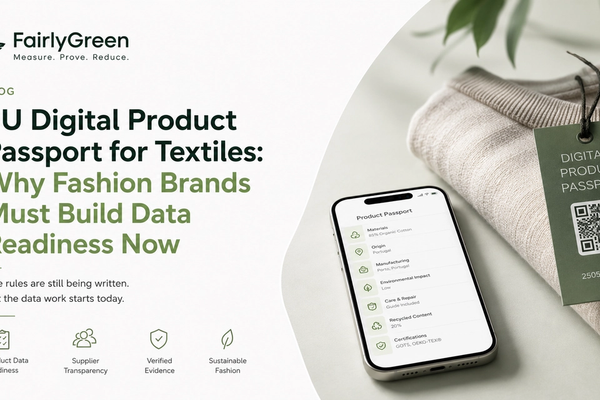
EU Digital Product Passport for Textiles: Why Fashion Brands Must Build Data Readiness Now
The EU Textile Digital Product Passport is not final yet. Here is what fashion brands, apparel manufacturers and suppliers should do now.