
PEFCR v3.1 Is Final - Here’s What Fashion Brands Must Do Next
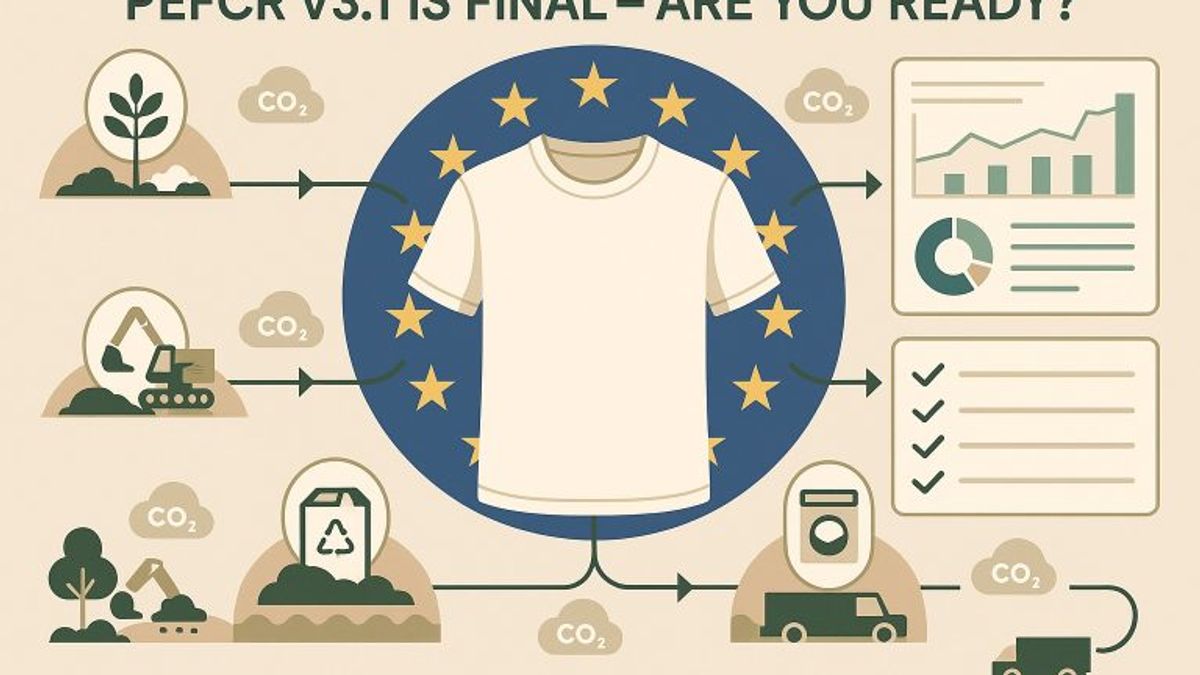
After five years of development, the Product Environmental Footprint Category Rules (PEFCR v3.1) for apparel and footwear are official. This is no longer a pilot - this is the standard.
After five years of development, the Product Environmental Footprint Category Rules (PEFCR v3.1) for apparel and footwear are official. This is no longer a pilot - this is the standard.
From fiber sourcing to microplastic shedding, the EU now mandates product-level environmental transparency, with clear rules for:
- What data you must collect
- How to model it
- What you’re allowed to claim
❗ Why This Matters for Fashion Brands & Suppliers
You must now:
- Measure emissions across the full product lifecycle
→ Including raw materials, manufacturing, use phase, distribution and end-of-life. - Use primary data wherever possible
→ Especially for high-impact stages like knitting, spinning, and dyeing. - Disclose at least 4 key impact categories, not a single “green score”
→ Climate change, fossil resource use, water use, and freshwater eutrophication are most common. - Report fiber-fragment shedding (even for natural fibers like cotton or wool)
→ Required under new microfiber module. - Build durability and repairability into your design and documentation
→ Or get penalized with a lower product lifespan score.
🔎 So What’s New in PEFCR v3.1?
- Final version valid until Dec 2027 (or EF 4.0 launch)
- Microfiber shedding inventory & impact now required
- Durability and repairability multipliers affect scores
- Use-phase modelling refined by product type and consumer habits
- Tighter rules for using digital tools, proxies, and software
- No single score in B2C marketing - only impact category disclosure
🧰 How FairlyGreen.io Helps You Comply (and Compete)
FairlyGreen.io is purpose-built to support your transition into PEFCR-compliant reporting:
✔️ Automate Measurement
- Collect and standardize data from your full supply chain
- Stage-by-stage carbon footprint breakdown
✔️ Align with Regulations
- All calculations follow EF 3.1 methodology
- Outputs ready for Green Claims Directive and DPP use
✔️ Optimize Footprint, Not Just Report It
- See which manufacturing stages have the highest emissions
- Replace proxies with supplier-verified primary data
- Add durability and repairability scores to boost product rating
📈 What’s Next for You
- Start with your best-selling product line
- Build a supplier engagement process for data collection
- Use FairlyGreen.io to calculate, validate, and report
- Future-proof your sustainability claims for EU compliance
Share this article
Help others discover this content
Similar Articles

EU Digital Product Passport for Textiles: What Brands Must Prepare for Now
The EU Digital Product Passport for textiles is not just a QR code. Learn what is decided, what remains proposed, and how to prepare now.
How Fashion Brands Can Lead on Sustainability with the New PEFCR Guidelines?
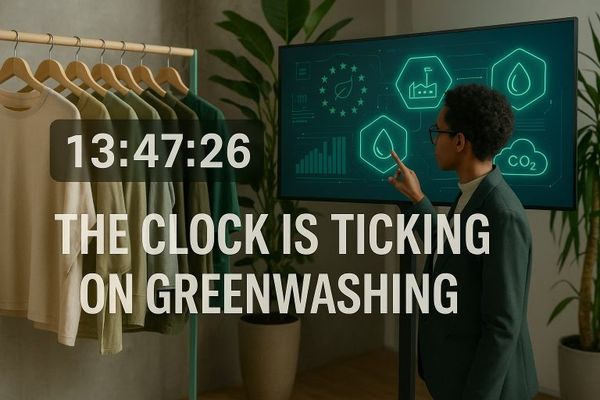
Sustainability isn’t just a trend - it’s becoming law. The EU’s latest Product Environmental Footprint Category Rules (PEFCR) for apparel and footwear, published in April 2025, set a new standard for carbon accounting across the fashion industry. If your brand isn’t prepared to align with these rules, you risk falling behind.
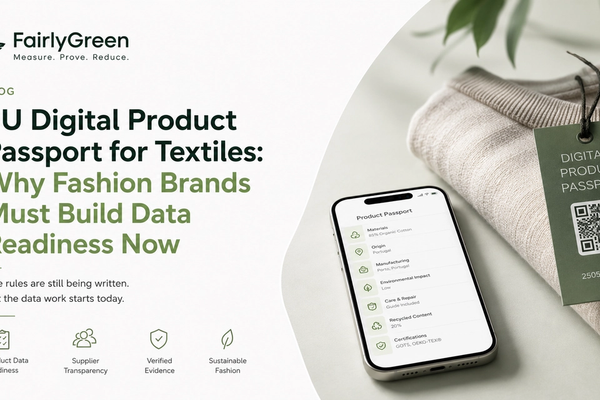
EU Digital Product Passport for Textiles: Why Fashion Brands Must Build Data Readiness Now
The EU Textile Digital Product Passport is not final yet. Here is what fashion brands, apparel manufacturers and suppliers should do now.